Footings hold up everything. Get them wrong and the rest of the deck fails — settling, sagging, separating from the house. Here's what we use and when.
Concrete Pier Footings
$$
The Wasatch Front standard.
Best for: Most ground-level to medium-height decks on stable soil.
Pros
Code-approved everywhere in Utah
Strong and proven — won't move once cured
Most cost-effective for typical builds
Monolithic pour available — we can pour footings and a concrete slab in one go to hide the footings under the slab for a clean finished look
Cons
Requires digging below frost line (~30")
Cure time can add a day to schedule
Hard to install in rocky areas
Zbolt Pick
Helical Pile Footings
$$$
Screw-in steel piles.
Best for: Tall decks, expansive soils, rocky ground, or jobs that need to skip cure time.
Pros
Installs in hours, build the next day
No spoils to haul off
Engineered load ratings, perfect for tall decks
Cons
More expensive than concrete
Specialty install — not every builder offers it (we do)
American Ground Screws
$$$
No concrete. No cure time. No mess.
Best for: Frozen ground, rocky soil, tight access lots, or anyone who wants a clean install with zero spoils.
Pros
Installs in minutes per screw — build the same day
Engineered load ratings, fully code-approved
Zero concrete, zero excavation spoils to haul off
Removable and reusable — great for decks that may move
Works in frozen ground and on tight-access lots
Cons
Specialty install with proprietary equipment
Higher per-footing cost than concrete piers
Diamond Piers
$$$
Engineered pin foundation. No digging, no concrete pour.
Best for: Sensitive landscaping, tight backyards, frost-prone soil, or jobs where you can't dig deep footings.
Pros
Drives steel pins through a precast head — installs in under an hour
ICC-ES code approved, engineered load ratings
No excavation, no spoils, minimal landscape disturbance
Resists frost heave and works on slopes
Cons
Higher material cost than poured concrete
Not ideal in solid bedrock conditions
Real Jobs
Footings we've done
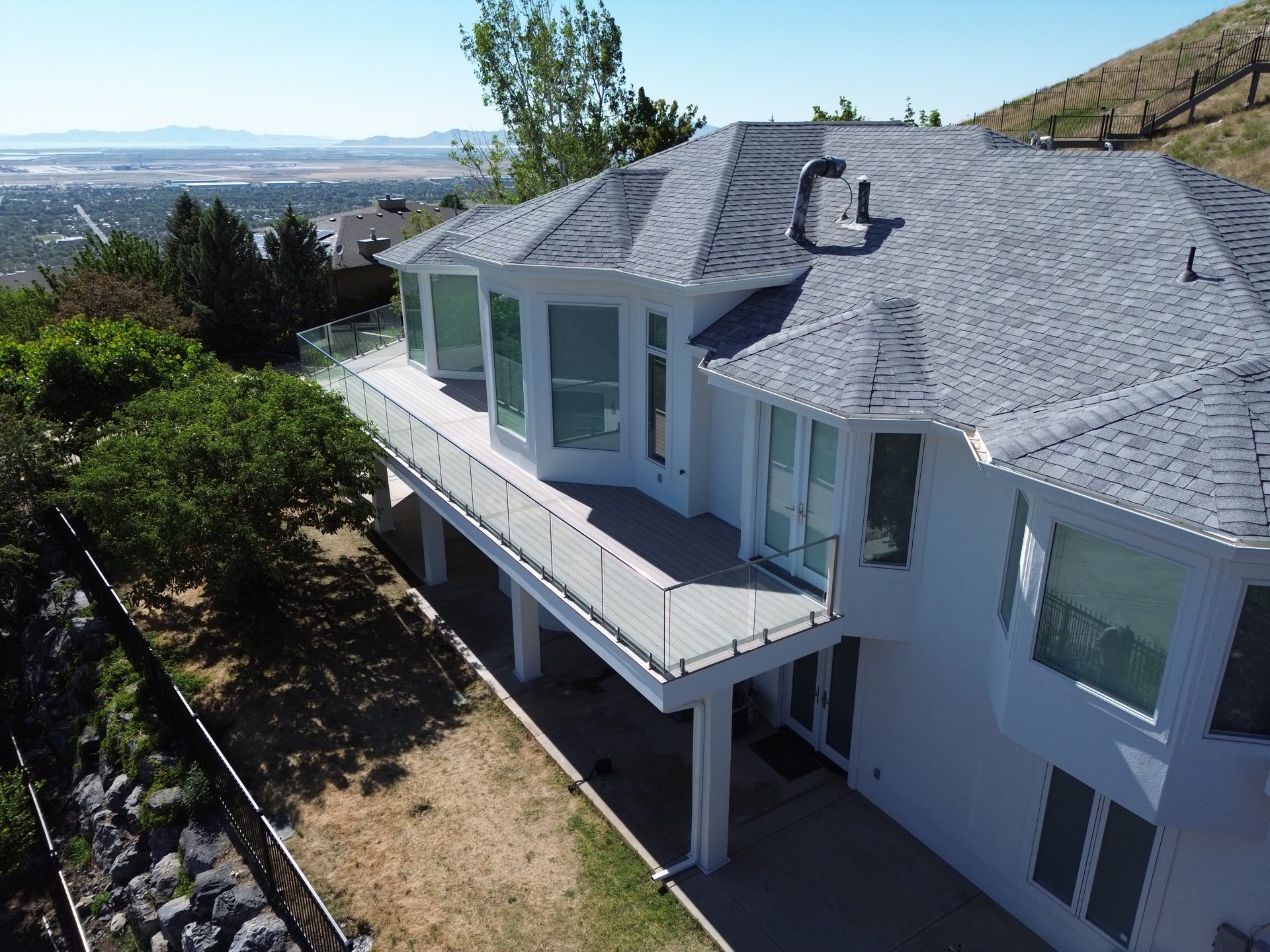
Helical piles on a steep Draper hillside
Draper · 2024
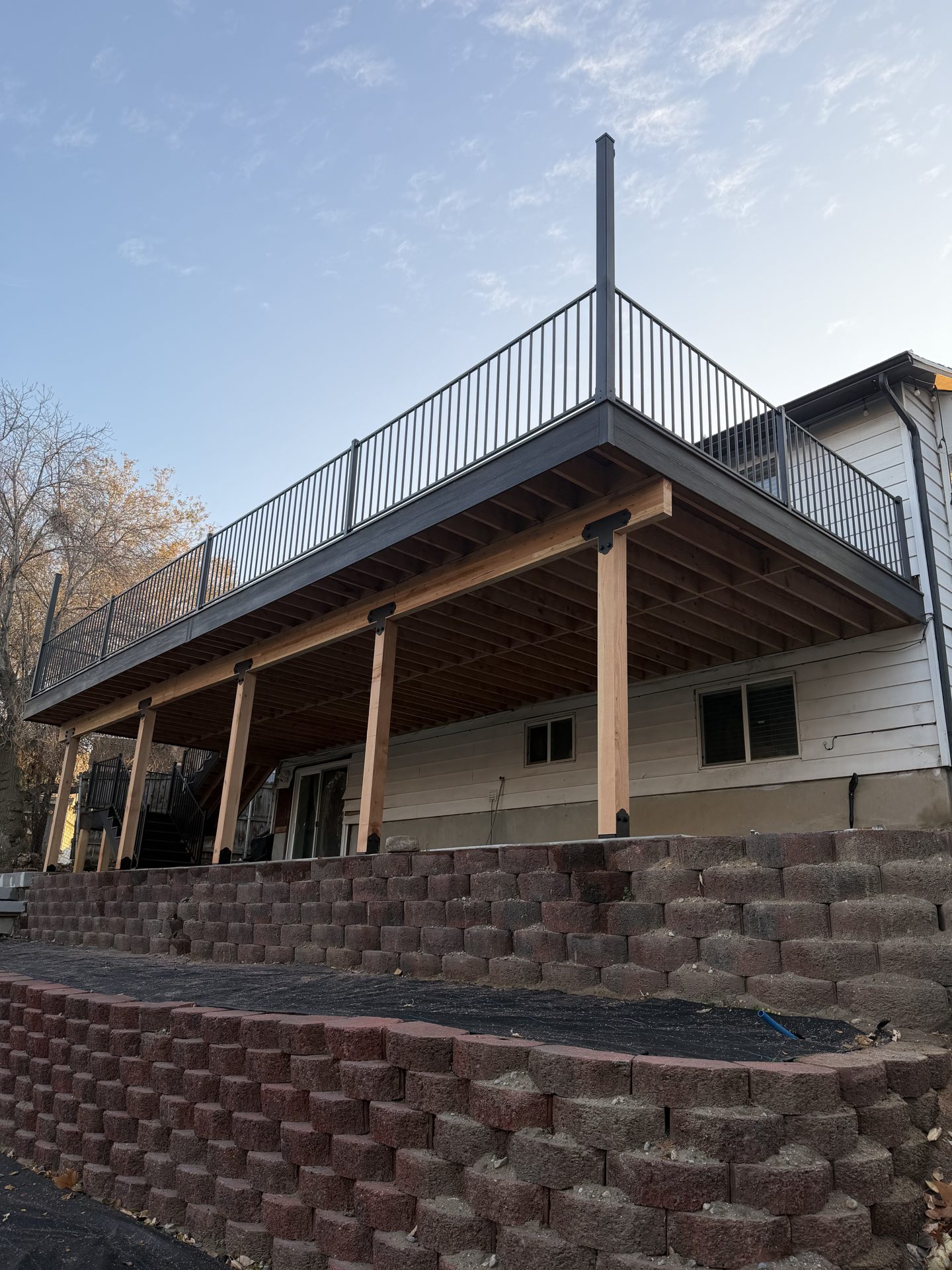
Concrete piers — 2-story Lehi rebuild
Lehi · 2024
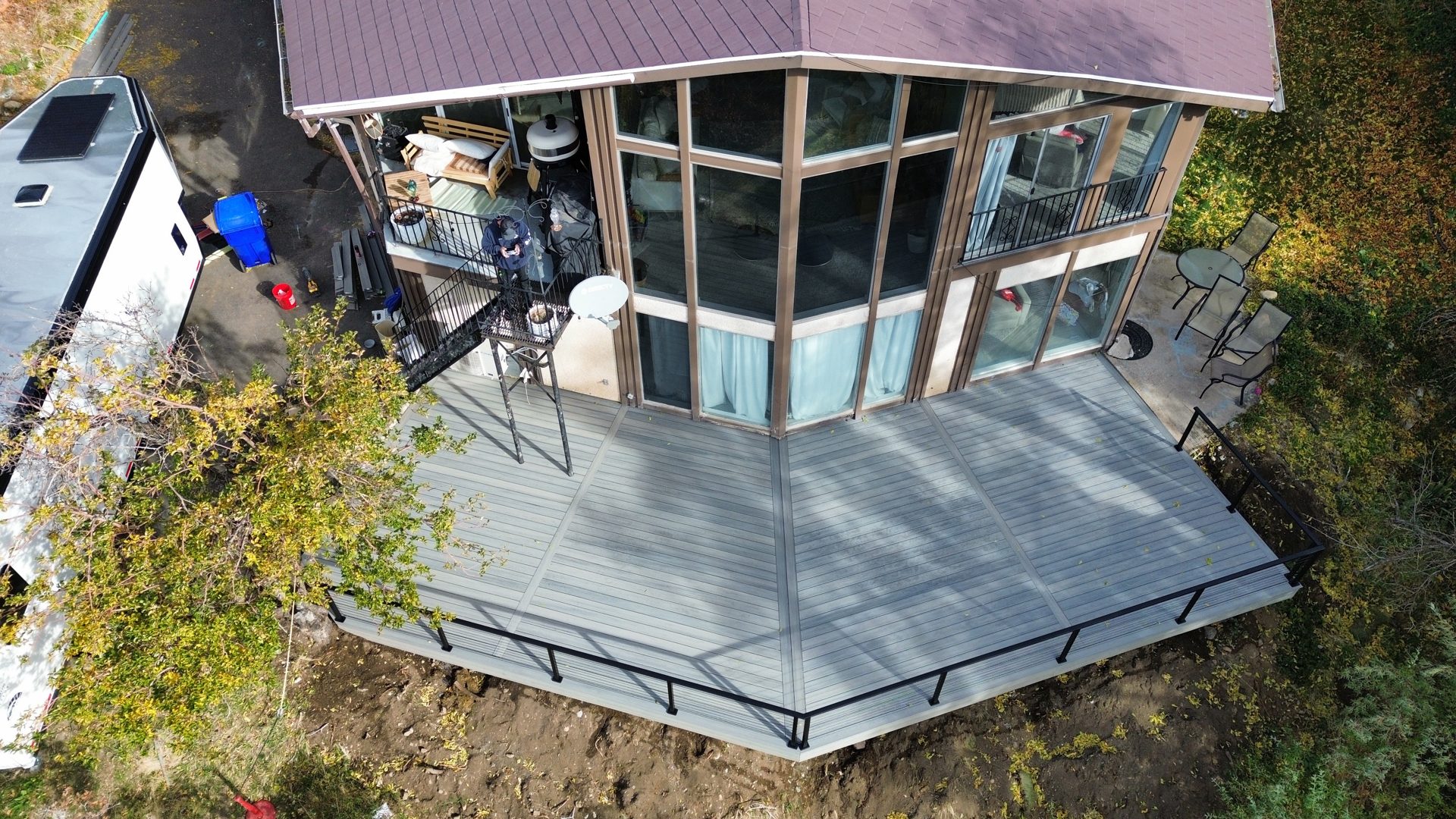
American Ground Screws on a Park City lot
Park City · 2024
Talk Directly With The Builder
Schedule your deck consultation.
Free on-site walkthroughs across nephi to salt lake — wasatch front, park city & heber. We'll review your space, your budget, footing & framing options, and the build that fits your needs — not industry standard.